

Quality Control Standards for Handmade Products

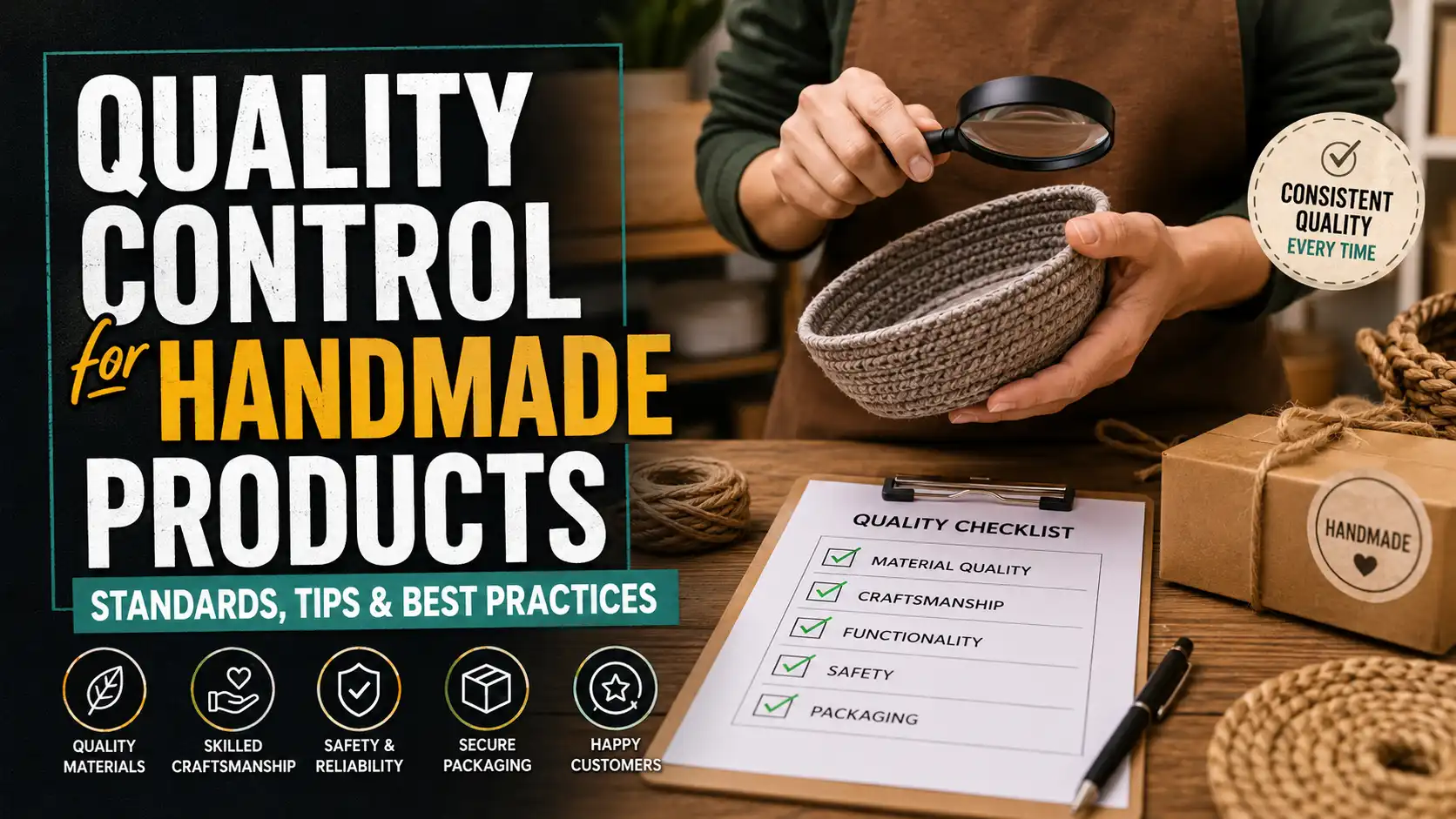
Handmade products have a special charm. Each item carries the touch of its maker, telling a unique story. But as demand for handmade goods rises, quality control standards have become more important than ever. Buyers expect consistency, reliability, and value—no matter how unique the product. Makers and sellers must find the balance between artistic freedom and strict quality checks. This article explores the world of quality control for handmade products, offering practical advice, real examples, and expert guidance.
Why Quality Control Matters For Handmade Products
Handmade goods are not mass-produced. Variations are natural, but quality issues can quickly harm a seller’s reputation. Quality control helps:
- Build trust with buyers
- Reduce returns and complaints
- Protect the maker’s brand and income
For example, a handmade soap maker who skips quality checks may face issues like uneven scent, rough texture, or allergic reactions. These problems can lead to negative reviews and lost customers. Even small mistakes can hurt, especially in markets like Etsy or Amazon Handmade, where competition is strong.
The Challenges Of Quality Control In Handmade Goods
Quality control in handmade products is not the same as in factories. Makers face unique challenges:
- Natural variation: Each item may look slightly different.
- Limited automation: Most steps are done by hand, increasing human error.
- Small batches: Testing methods must fit low-volume production.
- Material differences: Handmade products often use natural or recycled materials, which can vary.
For example, a potter might notice that clay from a new supplier dries differently, making bowls brittle. A jewelry maker might find that hand-cut stones are never exactly alike.
Essential Quality Control Standards For Handmade Products
To ensure consistent quality, handmade producers should set clear standards. These standards cover several areas:
Material Quality
Start with reliable materials. Check for defects, purity, and consistency.
- Fabric: Look for tight weaves, no stains, no holes.
- Wood: Avoid knots, cracks, or warped pieces.
- Metals: Use tarnish-free, allergy-safe alloys.
For example, candle makers often test wax batches for impurities. If the wax is too soft or contains debris, the candle won’t burn correctly.
Craftsmanship
Set measurable standards for skill and finish.
- Clean cuts and edges
- Smooth surfaces
- Even color or paint
- Secure joints or stitching
A common mistake: ignoring small flaws. Even tiny errors, like loose threads or uneven glaze, can disappoint buyers.
Functionality
Handmade items should work as promised.
- Test jewelry clasps for strength
- Check zippers on bags
- Light candles to verify burn time
Functional testing helps prevent returns and complaints.
Safety
Safety is essential, especially for products used on skin or for children.
- Use non-toxic materials
- Avoid sharp edges
- Follow regulations for labeling and warnings
For example, all-natural skincare makers must check for allergens and ensure clear ingredient lists.
Packaging And Presentation
Packaging is part of the buyer’s experience.
- Use clean, attractive boxes or bags
- Protect fragile items with padding
- Include care instructions
Good packaging reduces breakage and improves customer satisfaction.
Setting Up A Quality Control Process
Every handmade business needs a repeatable quality control process. Here’s how to create one:
- Define standards: Write down what “perfect” looks like for each product.
- Create checklists: Make step-by-step lists for inspecting each item.
- Train helpers: If you have assistants, teach them your standards.
- Inspect at every stage: Check materials, work-in-progress, and finished items.
- Document issues: Keep records of flaws, returns, and complaints.
- Update standards: Change your checklist as you improve or add new products.
For example, a soap maker might check each batch for color, scent, weight, and bubble quality, using a simple checklist.
Practical Quality Control Examples In Different Handmade Categories
Handmade products cover many categories. Each has specific quality needs. Let’s look at some practical examples.
Handmade Jewelry
- Inspect stones for chips and cracks
- Check solder joints for strength
- Verify metal purity with simple tests
- Test clasps for easy opening and closing
Handmade Clothing
- Check seams for straightness and strength
- Inspect fabric for stains or pulls
- Test buttons and zippers for ease of use
- Measure sizes to ensure accuracy
Handmade Candles
- Test burn time against product claims
- Check scent strength and consistency
- Inspect for air bubbles or cracks in wax
- Verify wick placement for even burning
Handmade Soaps
- Measure pH levels for skin safety
- Check hardness and lather quality
- Inspect for even color and texture
- Test for scent longevity
Handmade Pottery
- Tap for cracks or weak spots
- Check glaze for smoothness and coverage
- Test for water resistance
- Inspect size and shape for consistency
Handmade Toys
- Check for choking hazards
- Test paint for non-toxicity
- Inspect joints and seams for durability
- Verify age-appropriate labeling
Common Quality Control Mistakes (and How To Avoid Them)
Handmade sellers often make mistakes that can be easily avoided:
- Skipping batch testing: Always test a sample from each batch, even if you trust your process.
- Ignoring customer feedback: Reviews and complaints reveal real-world problems.
- Rushing inspections: Take time to check each item carefully.
- Using inconsistent materials: Buy from reliable suppliers and check each batch.
- Failing to update standards: Improve your checklist as you learn from experience.
Non-obvious insight: Many sellers forget to test packaging. Poor packaging can ruin even perfect products during shipping.
Quality Control Tools For Handmade Businesses
Handmade makers can use simple tools to improve quality:
- Magnifying glass: Helps spot tiny flaws
- Scale: Ensures weight consistency
- Light box: Reveals color differences
- PH strips: Useful for soaps and skincare
- Calipers: Measure size precisely
For small businesses, digital tracking (like spreadsheets) helps keep records of quality issues and improvements.
Quality Control Vs. Quality Assurance
Many confuse quality control with quality assurance. Both are important, but different.
- Quality control: Checking finished products for defects.
- Quality assurance: Making sure the process produces consistent results.
For example, quality assurance might mean training all staff in best practices, while quality control is inspecting each item before shipping.
Industry Standards And Certifications
Some handmade categories have industry standards or certifications. These help sellers prove their quality:
- Fair Trade certification: Confirms ethical production.
- Organic certification: Shows use of certified organic materials.
- Safety marks: Like ASTM for toys, or FDA for skincare.
Meeting these standards can open new markets and build trust. For example, Fair Trade jewelry sellers often get higher prices and better visibility.
The Role Of Feedback In Quality Improvement
Customer feedback is a powerful tool for quality control. Makers should:
- Review all complaints and returns
- Look for patterns (like repeated flaws)
- Respond quickly to issues
- Use feedback to update standards and processes
Many successful handmade businesses track feedback in a spreadsheet, noting the type of issue and changes made. This helps prevent future mistakes and shows buyers you care.
Comparing Handmade And Mass-produced Quality Control
Handmade and factory-made goods use different quality control methods. Here’s a quick comparison:
| Aspect | Handmade Products | Mass-Produced Products |
|---|---|---|
| Variation | Natural, expected | Minimal, uniform |
| Testing | Small batch, manual | Automated, large batch |
| Material Quality | Often higher, more natural | Standardized, sometimes synthetic |
| Process | Flexible, creative | Fixed, repeatable |
| Cost | Higher per item | Lower per item |
How To Develop Your Own Quality Control Standards
Every handmade maker should create standards that fit their products and values. Here are steps to develop your own:
- Analyze customer expectations: What do buyers want most? Durability, appearance, safety?
- Study competitors: What standards do top sellers use?
- Set measurable criteria: For size, weight, finish, color, etc.
- Write clear checklists: Use simple language and photos if possible.
- Test regularly: Check samples from every batch.
- Seek feedback: Ask customers for honest reviews.
- Update as needed: Change standards based on feedback and new materials.
For example, a bag maker might set standards for stitching strength (minimum 8 stitches per inch), zipper quality (YKK brand only), and fabric weight (at least 10 oz canvas).
Example: Quality Control Checklist For Handmade Soap
Here is a sample checklist for a handmade soap business:
- Check color for evenness
- Smell each bar for scent strength
- Test hardness by pressing gently
- Measure weight (should be within 5% of claim)
- Test lather quality (should bubble in warm water)
- Check packaging for cleanliness
- Review ingredient list for accuracy
This checklist ensures each bar meets high standards, reducing complaints and boosting trust.
Quality Control Data Tracking: Why It Matters
Tracking quality control data helps makers spot trends and fix problems faster. Here’s how to do it:
- Use a simple spreadsheet with columns for date, batch, defect type, action taken
- Review data monthly to look for patterns
- Share results with helpers or partners
For example, a candle maker might notice that “cracked wax” happens more often in winter. Adjusting storage or production can solve the issue.
Using Technology To Improve Quality Control
Even small handmade businesses can use technology to improve quality:
- Digital photos: Take pictures of each batch for records
- Barcode labels: Track batches and materials
- Online forms: Collect customer feedback easily
- Inventory apps: Monitor material quality and usage
Some sellers use simple apps like Google Sheets or Trello to organize quality checks and feedback.
Selling Handmade Products Online: Quality Control For E-commerce
Online buyers can’t touch or see products before buying. Quality control is even more important for e-commerce sellers.
- Use detailed photos showing all angles
- Write clear descriptions, including size and material
- Offer care instructions and warnings
- Respond quickly to complaints or questions
- Package items securely for shipping
For example, a pottery seller might show close-up photos of glaze and include a video of water testing.
How Quality Control Affects Pricing And Brand Reputation
High-quality handmade products can be sold at higher prices. Buyers are willing to pay more for:
- Consistent craftsmanship
- Reliable function
- Attractive presentation
For example, handmade jewelry with visible quality checks and certificates can sell for 20–50% more than unverified items.
Brand reputation is built on quality. Sellers who regularly check and improve their products gain loyal customers and positive reviews.
Comparing Popular Quality Control Standards
Many handmade makers use different standards. Here is a comparison of three common approaches:
| Standard | Features | Best For |
|---|---|---|
| Maker’s Checklist | Custom list, flexible, updated often | Small businesses, new makers |
| Industry Certification | External audits, strict rules | Skincare, toys, food products |
| Peer Review | Checked by other makers, informal | Co-ops, craft groups |
The Future Of Quality Control In Handmade Products
As handmade markets grow, quality control will become even more important. Buyers expect not just uniqueness, but reliability. Makers who invest in quality will stand out, earn higher prices, and build lasting brands.
New trends include:
- Eco-friendly standards: More buyers want sustainable, safe products.
- Digital certificates: Proof of quality, shared online.
- Collaborative quality checks: Makers help each other spot flaws.
For more on quality management, visit Wikipedia’s Quality Management page.
Frequently Asked Questions
What Is Quality Control In Handmade Products?
Quality control means checking each item for defects, consistency, and safety before selling. It ensures buyers get what they expect and protects the maker’s reputation.
How Can I Improve Quality Control In My Handmade Business?
Start by writing clear standards for your products. Use checklists, inspect each item, train helpers, and track feedback. Update your process as you learn.
Are Quality Control Standards Different For Handmade Vs. Factory Products?
Yes, handmade products have natural variations and smaller batch sizes. Quality control is more manual and flexible, while factories use automated, strict methods.
Do Handmade Products Need Certifications?
Some categories, like toys or skincare, require certifications for safety or organic status. Others can use custom standards. Check regulations in your market.
How Does Quality Control Affect Online Sales?
Quality control is critical for online sales. Buyers rely on photos and descriptions. Strong quality checks reduce returns, complaints, and build trust.
Careful quality control is the secret to lasting success in the handmade world. Makers who focus on reliability and consistency will grow their brands, attract loyal customers, and enjoy fewer returns. By blending artistic skill with practical standards, every handmade product can shine.